Equipment used: Tracer gas, thermal imaging , moisture meter profiling and visual inspection.
When arriving at the property the damage could be seen on the walls and floor in the bedroom.
Moisture meter profiling was conducted to the affected area, which showed fully saturated readings of 999REL.


A thermal imaging survey was carried out, tracing the heating pipework throughout the property.
We were informed that the boiler would lose pressure every few days, so to confirm our findings we decided to carry out a tracer gas survey. This was carried out at 2Bar and a drop in pressure was observed within 1 hour of the testing, indicating that there is a leak.
The internal heating feeds was scanned for detections of gas and any high readings. Readings of 450PPM were found consistently within the bedroom, indicating the leaks presence.
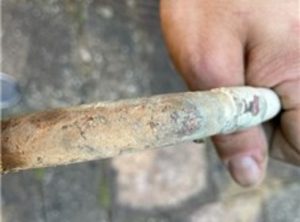
Moreover, we excavated the point of tracer gas and found a crack in the heating pipework.

This section of leaking pipework was replaced, refilled the system and the boiler is now holding pressure and no further leaks were apparent.